

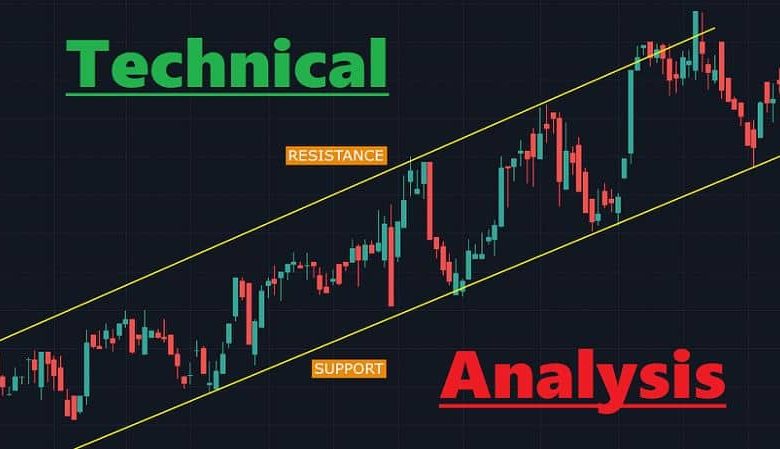
Technical analysis helps traders evaluate market behavior by studying price movement, chart patterns, and indicators. Instead of relying on assumptions or predictions, traders use historical price data to identify trends, entry opportunities, and risk levels. When applied correctly, technical analysis increases decision clarity and improves trading accuracy over time.
Rather than guaranteeing profits, it strengthens probability-based decision making and reduces emotional trading mistakes.
What Is Technical Analysis in Trading
Technical analysis is the study of past price movement and market structure to forecast potential future behavior. It focuses on charts, patterns, and indicators rather than company fundamentals or economic reports.
Technical traders analyze:
- Price trends
- Support and resistance levels
- Chart formations
- Trading volume
- Indicator signals
This approach allows traders to make structured decisions based on observable market activity.
Why Technical Analysis Improves Trading Decisions
Markets move in recognizable patterns because trader behavior often repeats. Technical analysis helps identify these repeating structures and improves entry timing.
It improves trading accuracy by:
- Identifying trend direction clearly
- Highlighting strong entry zones
- Defning exit opportunities early
- Managing risk before placing trades
- Avoiding random decision making
Structured chart reading increases confidence and consistency.
Understanding Market Trends More Clearly
Trend identification is one of the strongest advantages of technical analysis. Trading in the direction of the trend increases probability of success.
There are three major trend types:
- Uptrend with higher highs and higher lows
- Downtrend with lower highs and lower lows
- Sideways movement within a range
Recognizing trend direction helps traders avoid countertrend mistakes and improves timing accuracy.
Using Support and Resistance for Better Entries
Support and resistance levels represent areas where price frequently reacts. These zones help traders decide where to enter and exit positions more effectively.
Support levels often indicate potential buying interest, while resistance levels suggest possible selling pressure.
Traders use these zones to:
- Plan low-risk entry points
- Place protective stop levels
- Estimate realistic targets
- Avoid chasing price movement
These levels improve structure in trade planning.
Role of Candlestick Patterns in Trade Confirmation
Candlestick patterns reveal short-term market sentiment and help confirm trading setups. They provide visual clues about whether buyers or sellers are controlling price action.
Common confirmation patterns include:
- Reversal formations near key levels
- Momentum continuation signals
- Consolidation breakouts
Using candlestick signals alongside trend direction increases trade reliability.
Importance of Technical Indicators in Market Analysis
Technical indicators convert price movement into measurable signals. They help traders interpret momentum, volatility, and trend strength.
Popular indicators used by traders include:
- Moving averages for trend direction
- Relative strength index for momentum signals
- MACD for trend confirmation
- Volume indicators for participation strength
Indicators should support decision making rather than replace chart reading.
Improving Risk Management With Chart Analysis
Technical analysis helps traders define risk before entering a trade. Instead of guessing exit points, traders rely on chart structure.
Chart-based risk planning includes:
- Placing stop levels below support zones
- Setting targets near resistance areas
- Measuring trend strength before entry
- Avoiding trades during weak market structure
This reduces unnecessary exposure and improves trade consistency.
Timing Entries More Effectively
Accurate timing separates successful traders from inconsistent ones. Technical analysis improves timing by combining trend direction with confirmation signals.
Better timing leads to:
- Smaller stop distances
- Higher reward potential
- Reduced emotional pressure
- Stronger trade confidence
Entry precision directly improves overall trading performance.
Combining Multiple Signals for Higher Accuracy
Professional traders rarely rely on a single signal. Accuracy improves when multiple technical tools confirm the same idea.
High probability setups often include:
- Trend alignment
- Support or resistance confirmation
- Indicator agreement
- Volume participation signals
Combining signals filters weak opportunities and strengthens decision quality.
Avoiding Emotional Trading With Structured Analysis
Technical analysis replaces guesswork with structured observation. When traders follow chart-based rules, emotional reactions decrease significantly.
This structure helps traders:
- Follow predefined entry conditions
- Avoid impulsive trades
- Maintain discipline during volatility
- Stay consistent with strategy execution
Consistency improves long-term performance more than occasional large profits.
Frequently Asked Questions
Can technical analysis work in all financial markets
Technical analysis can be applied across stocks, commodities, currencies, indices, and digital assets because price behavior reflects market participation in every segment.
Is technical analysis useful for short-term trading only
No. It supports both short-term trading and longer holding periods depending on the timeframe used for chart evaluation.
How many indicators should traders use together
Most traders perform better using two to three complementary indicators rather than combining too many signals that create confusion.
Does technical analysis require advanced mathematics
Technical analysis mainly involves pattern recognition and indicator interpretation rather than complex calculations.
Can technical analysis predict market direction perfectly
Technical analysis improves probability but cannot guarantee outcomes because markets remain influenced by unexpected events.
Should beginners start with indicators or price action
Beginners often benefit from learning price structure first and then adding indicators gradually for confirmation.
How often should traders review their technical analysis strategy
Regular monthly performance review helps traders refine setups and adjust techniques based on results.